
FREE WEBINAR: The Airway–Fascia Connection:
The Missing Link in Strength, Movement & Recovery
What if the missing piece in your client’s performance isn’t another exercise, but how they breathe, manage pressure, and recover?
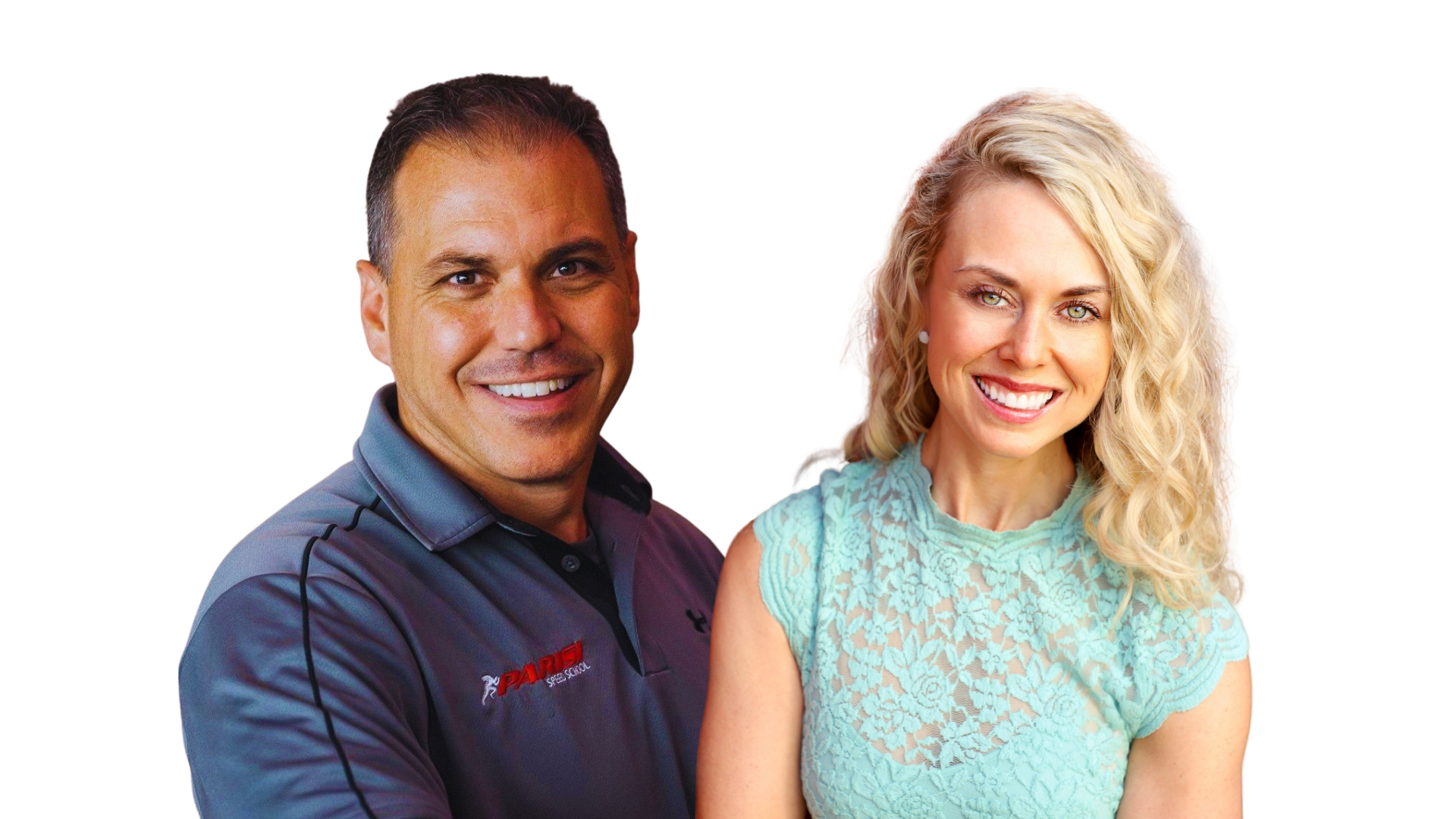
Join Bill Parisi and Dr. Arianne Missimer for a four-week virtual mentorship that connects airway function, breathing mechanics, and the fascial system to practical coaching and training strategies. Discover how these interconnected systems influence movement efficiency, trunk stability, force production, and recovery… and learn how to put that knowledge to work with your clients.
From fascia and biotensegrity to adaptable pressure regulation, sleep, and airway screening, each session builds toward a more complete understanding of performance.
Explore Bill’s YOO Method (Yielding, Overcoming, and Oscillatory Isometrics) to develop force acceptance, production, and control.
Learn from Dr. Missimer how to recognize breathing and recovery patterns that may be limiting progress, apply targeted strategies, and identify when collaboration or referral is appropriate.
Walk away with a practical screen–intervene–retest framework to make more informed coaching decisions and help your clients move, perform, and recover more effectively. Reserve your spot and discover the connection your coaching may be missing.
Unlock the performance potential of every breath.
What Does Certification Include?
Live Zoom Sessions with Industry-Leading Experts
Bill Parisi and Dr. Arianne Missimer explore how airway function, breathing mechanics, and fascia work together to influence movement, stability, performance, and recovery.
Each session blends science with practical application… connecting breathing and pressure regulation to efficient force transfer, adaptable movement, and restorative sleep. Gain a clear framework for recognizing patterns, applying targeted strategies, and guiding your clients toward better performance.
Lifetime Access to Recordings
You’ll also receive lifetime access to all mentorship recordings, resources, and study materials. This means you can revisit every lesson, exercise demonstration, and discussion at your own pace, long after the live mentorship concludes, ensuring you can continue to learn, apply, and evolve your understanding over time.
Discover the missing link between breathing, fascia, and performance.
Curriculum
All sessions are held via Zoom at 12pm ET / 9am PT (US).
Fascia, Biotensegrity & the Breathing–Movement Connection with Bill Parisi
This session introduces the fascial system and why it matters to movement, performance, force transmission, and resilience. Bill will explore fascia as a body-wide connective-tissue and sensory network, introduce the principles of biotensegrity, and examine the thoracolumbar fascia and Deep Front Line as practical maps for understanding integrated movement. The session will also explore how fascial structures interact with the rib cage, diaphragm, trunk, and breathing mechanics, creating a foundation for understanding the relationship between breathing, pressure, posture, and athletic performance.
Learning Objectives
- Describe biotensegrity as a whole-system framework for understanding how the body distributes and manages force.
- Define fascia as a body-wide connective-tissue and sensory system and explain its importance to movement and performance.
- Explain the role of fascia in force transmission, proprioception, tissue continuity, elastic energy storage and return, and movement efficiency.
- Identify the functional relationships of the thoracolumbar fascia and Deep Front Line and their relevance to integrated movement.
- Explain how the diaphragm, rib cage, breathing mechanics, and pressure interact with the fascial system during movement and performance.

Airway Function, Intra-Abdominal Pressure & Performance with Dr. Arianne Missimer
This session explores airway function as a foundation for movement, stability, performance, and recovery. Dr. Missimer will examine how nasal access, breathing patterns, and respiratory physiology influence diaphragm function, rib-cage motion, and nervous-system regulation. The session will also explore how the diaphragm, abdominal wall, pelvic floor, and rib cage work together to create adaptable intra-abdominal pressure, distinguishing effective pressure regulation from rigid bracing, breath holding, and pressure leakage. Participants will learn practical strategies to support reflexive stabilization and foot-to-airway sequencing, along with a brief coaching-level screen to guide intervention, monitoring, collaboration, or referral.
Learning Objectives
-
Explain why airway function belongs within a comprehensive model of strength, mobility, recovery, and performance.
-
Describe how breathing mechanics and respiratory physiology influence diaphragm function, intra-abdominal pressure, trunk stiffness, and movement strategy.
-
Explain how the diaphragm, rib cage, abdominal wall, and pelvic floor coordinate to create adaptable intra-abdominal pressure.
-
Differentiate responsive pressure regulation from excessive bracing, breath holding, bearing down, and pressure leakage.
-
Identify strategies to support reflexive stabilization, pressure regulation, and foot-to-airway sequencing.
-
Recognize common airway and pressure findings through a brief coaching-level screen and determine when to coach, monitor, collaborate, or refer.
Maximizing Force: Dynamic Systems & the YOO Method with Bill Parisi
This session explores how to help your clients organize movement and manage and maximize force through the principles of Dynamic Systems Theory, self-organization, and the Constraints-Led Approach. Bill will examine the importance of the body’s central pressure system, the diaphragm, pelvic floor, abdominal wall, including the transversus abdominis, and surrounding trunk structures, and how coordinated intra-abdominal pressure contributes to adaptable trunk stiffness and a stable platform for movement. Participants will explore how effective pressure regulation can support proximal stability, allowing the nervous and musculoskeletal systems to organize efficient movement and express force through the distal limbs into the ground, an implement, or an opponent. The session will then connect these principles to pulsing and the YOO Method; Yielding, Overcoming, and Oscillatory Isometrics, as practical strategies for developing an athlete’s ability to create, regulate, transmit, and release tension and force as performance demands continually change.
Learning Objectives
- Explain the foundational principles of Dynamic Systems Theory and how movement emerges through self-organization.
- Identify individual, task, and environmental constraints and explain how the Constraints-Led Approach can guide movement and performance.
- Describe the diaphragm, pelvic floor, abdominal wall, and transversus abdominis as key contributors to the body’s pressure-regulation system.
- Explain how intra-abdominal pressure contributes to adaptable trunk stiffness, proximal stability, and efficient force transfer to the distal limbs.
- Explain the concept of pulsing as the ability to appropriately create, regulate, release, and recreate tension and stiffness during dynamic movement.
- Differentiate Yielding, Overcoming, and Oscillatory isometrics and explain how the YOO Method can be used to develop force acceptance, force production, and reactive force regulation.
- Connect pressure regulation, self-organization, and YOO training to more adaptable and efficient athletic performance.
Sleep, Recovery & Airway Screening with Dr. Arianne Missimer
This session explores the relationship between sleep, airway function, and recovery, highlighting how sleep-related breathing influences nervous-system regulation, tissue repair, readiness, and training adaptation. Dr. Missimer will examine common signs of sleep-disordered breathing and introduce a practical, layered screening process that considers health history, breathing mechanics, pressure regulation, movement, and recovery response. Participants will learn how to interpret screening tools in context, apply breathing and airway strategies to support sleep and recovery, and recognize when referral is appropriate—while clearly distinguishing coaching observations from diagnosis.
Learning Objectives
-
Explain how sleep and sleep-disordered breathing influence recovery, readiness, nervous-system regulation, and tissue adaptation.
-
Recognize common signs of sleep-disordered breathing, including snoring, gasping, dry mouth, morning headaches, daytime sleepiness, and poor recovery.
-
Conduct a brief, repeatable airway and breathing screen within professional scope.
-
Explain the appropriate use and limitations of respiratory rate, BOLT, Epworth, and STOP-BANG as screening information rather than diagnostic tools.
-
Interpret screening findings in context and identify breathing and airway strategies to support sleep and recovery.
-
Identify appropriate referral triggers and communicate observable findings to relevant clinicians without diagnosing.
Build better movement through better breathing.
Powerful Recommendations

“Bill Parisi has an incredible passion for understanding the scientific research surrounding sports performance training, and then being able to synthesize the research and communicate it in a straightforward manner for the reader. In Fascia Training, Bill re-examines traditional concepts through the lens of new research, with important practical applications for coaches and athletes.”
Dr. Ken Clark
Associate Professor of Biomechanics and Sprints Coach, West Chester University of PA
“Bill connected some difficult dots on the science and application of fascia training. Blending the world of research, science and athlete tested application on a topic as novel as how to optimally train fascia was no small feat, but Bill did it — and in an entertaining way at that.”
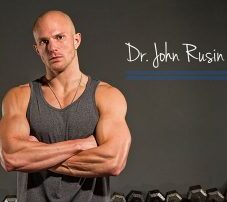
Dr. John Rusin
America’s Top 50 Health & Fitness Expert
“In the pursuit of demystifying fascia and its importance for human performance, this book captures the compelling stories and personalities of each expert and their individual journey towards mastery. As one of the people interviewed, I can declare that Bill pulled stories out of me that I had either forgotten or would never think to tell. That is the magic of Parisi and his disarming style. A warm personality who is very likeable and engaging, he simply massages the stories out of you, then shares his own insights along the way in a charming style. I love this book.”
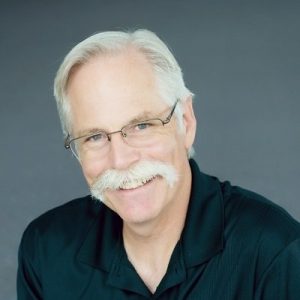
Dr. Stuart McGill
Distinguished Professor Emeritus, University of Waterloo
“New science is being discovered and we as NFL Strength Coaches are fortunate to have people like Parisi who help to provide this information and resources to our group in a way that is useful and can be immediately applied to our programming.”

Josh Hingst
NFL Strength and Conditioning Coach
“The information is cutting edge and something every coach at every level should be aware of to help prevent injury and improve performance.”
Mark Lovat
NFL Strength and Conditioning Head Coach
Connect breath, stability, and strength.
Meet Bill Parisi, BA, CSCS
Founder & CEO, Parisi Speed School & Fascia Training Academy
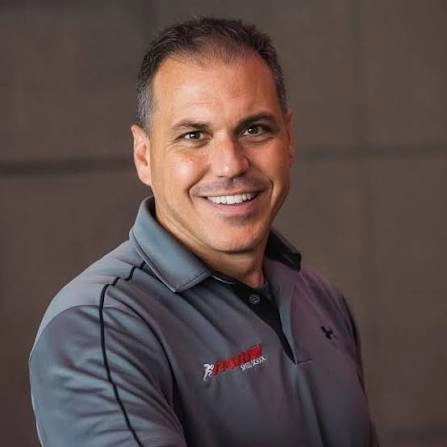
Bill Parisi has spent over three decades revolutionizing athletic training and education. He is the author of two well-known books, Anatomy of Speed and Fascia Training in Application, which provide in-depth insights into performance enhancement, injury resiliency, and the role of fascia in movement. His extensive background in sports science, along with a commitment to innovation in human performance, uniquely qualifies him to offer continued education and resources to professionals in the field. Through his expertise, he aims to enhance the skills of athletic trainers and performance coaches, fostering a deeper understanding of injury resiliency, athletic development, and fascia training.
Meet Dr. Arianne Missimer DPT, RD, LDN, IFMCP, CSCS
Founder & CEO, The Movement Paradigm
Physical Therapist, Registered Dietitian, Functional Medicine Practitioner
Dr. Arianne Missimer is a Doctor of Physical Therapy, certified functional medicine practitioner, and founder of The Movement Paradigm Integrative Health Center. Inspired by the loss of her brother and her own experience overcoming stage 3 liposarcoma, she takes a holistic approach to care that integrates movement, nutrition, and nervous system regulation. A master instructor for EBFA Global, she educates health and fitness professionals nationwide on barefoot science, movement, and functional medicine. Dr. Missimer is also the author of Rise Up and a passionate advocate for empowering individuals to take control of their health.
Transform how your clients move, perform, and recover.
Frequently Asked Questions (FAQ)
– Performance coaches
– Strength & conditioning specialists
– Athletic trainers & therapists
– Movement professionals ready to level up
– Anyone seeking a science-backed edge in training
Your certification is valid for 2 years. You must attend a recertification event every two years to maintain your Certification.
Access to the recordings never expires! Revisit them as much as you’d like.